Understanding the Difference
Mini scuba tanks are compact self-contained air cylinders that store compressed breathing air directly inside the tank. They are often marketed online with hand pumps and portability-focused advertising. While they can work for very short dives or emergency backup air, many divers quickly realize that compressed air takes up a significant amount of space.
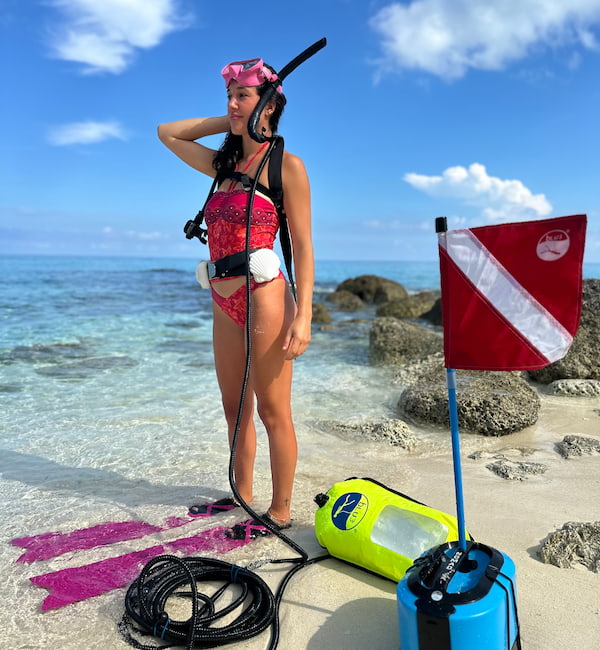
BLU3 systems work differently. Instead of storing all breathing air inside a tiny cylinder, BLU3 uses a floating battery-powered compressor on the surface that supplies air through a hose while you dive. This allows for significantly longer shallow-water sessions without carrying large scuba cylinders on your back. Many divers searching for a portable underwater breathing device eventually discover that tankless dive systems can be a more practical solution for shallow-water exploration and boat maintenance.
A Simple Reality Check on Mini Scuba Tanks
There is a reason traditional scuba tanks are large. A standard aluminum 80 scuba tank contains roughly 80 cubic feet of compressed air, and even that only gives many divers around an hour of dive time in shallow water.
Many mini scuba tanks being advertised online only hold around 3 to 6 cubic feet of air. That means they are roughly 13 to 26 times smaller than a standard scuba tank.
If you do quick math from a one-hour dive on a normal scuba tank, a tiny 3 to 6 cubic foot tank may only provide somewhere around 2 to 5 minutes of usable breathing time depending on depth and breathing rate.
Then you have to refill the tank again, which is usually far more inconvenient than social media ads make it appear. Many divers also discover that hand-pumping these small cylinders takes considerable effort and time.
At a Glance Comparison
Comparing mini scuba tanks, Brownie’s Third Lung systems, and BLU3 tankless dive systems across the categories that matter most to divers.
| Feature | Mini Scuba Tanks | Brownie’s Third Lung | BLU3 Nomad / Mini |
|---|---|---|---|
| Air Source | Compressed air tank | Battery or gas-powered floating surface air system | Battery-powered floating surface air system |
| Max Depth | Typically advertised around 10 ft max | Up to 65 ft | Up to 30 ft |
| Typical Runtime | Around 3 minutes | Up to 3+ hours | Up to 3+ hours with extended battery |
| Travel Convenience | Compact but requires tank refills | Portable multi-diver floating system | Ultra-portable backpack-style dive system |
| Common Use | Emergency backup air or ultra-short dives | Family diving, lobstering, multi-diver sessions | Boat maintenance, shallow-water diving, underwater inspections, travel |
| Extending Dive Time | Requires tank refills and repressurizing | Swap batteries or refuel gas systems | Recharge or swap batteries |
Popular BLU3 Applications
BLU3 systems are commonly used for shallow-water diving, hull cleaning, underwater photography, marine inspections, pool service, travel adventures, and underwater exploration.
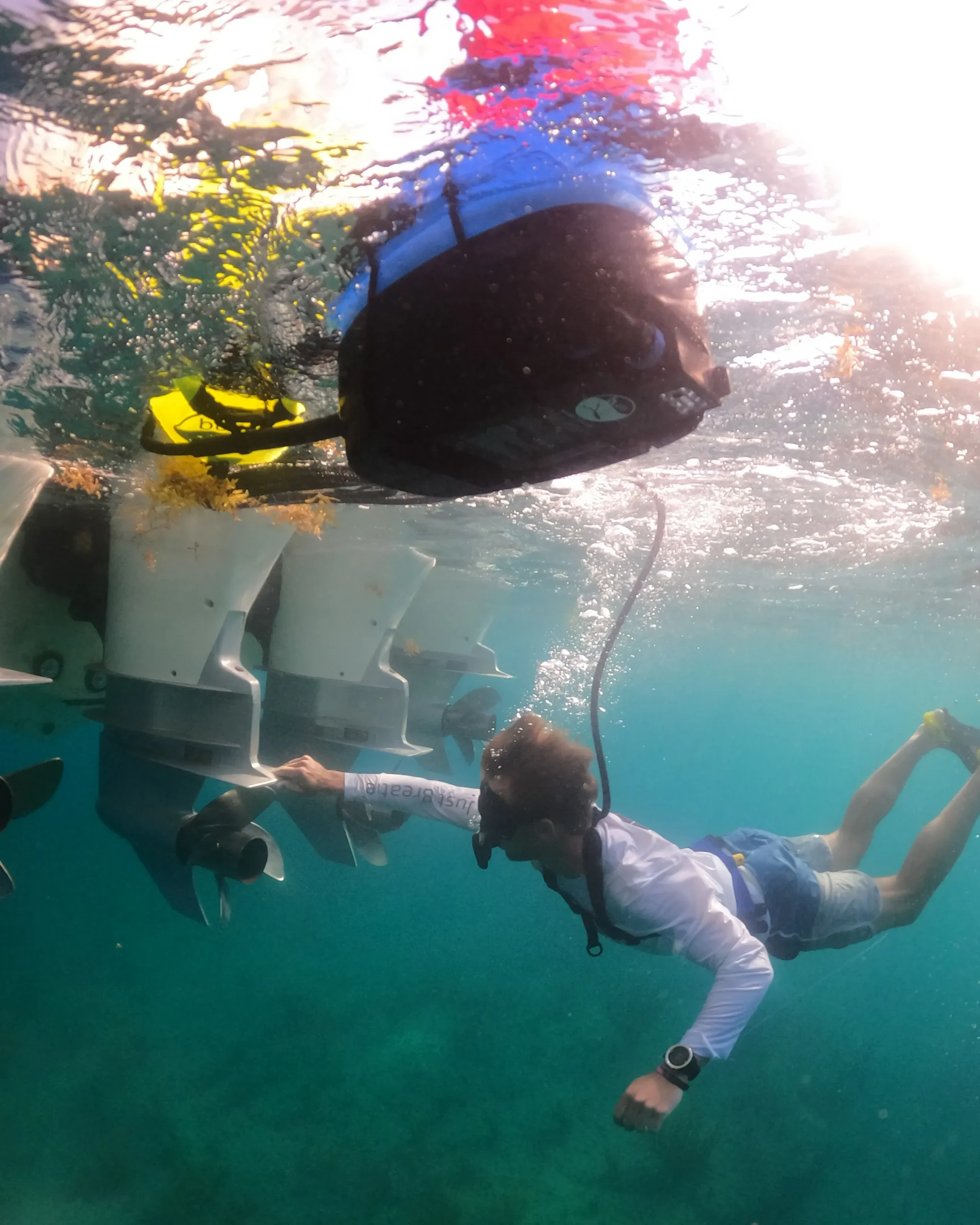
Boat Maintenance
Inspect propellers, hulls, intakes, and running gear without hauling heavy scuba cylinders or bulky dive equipment.
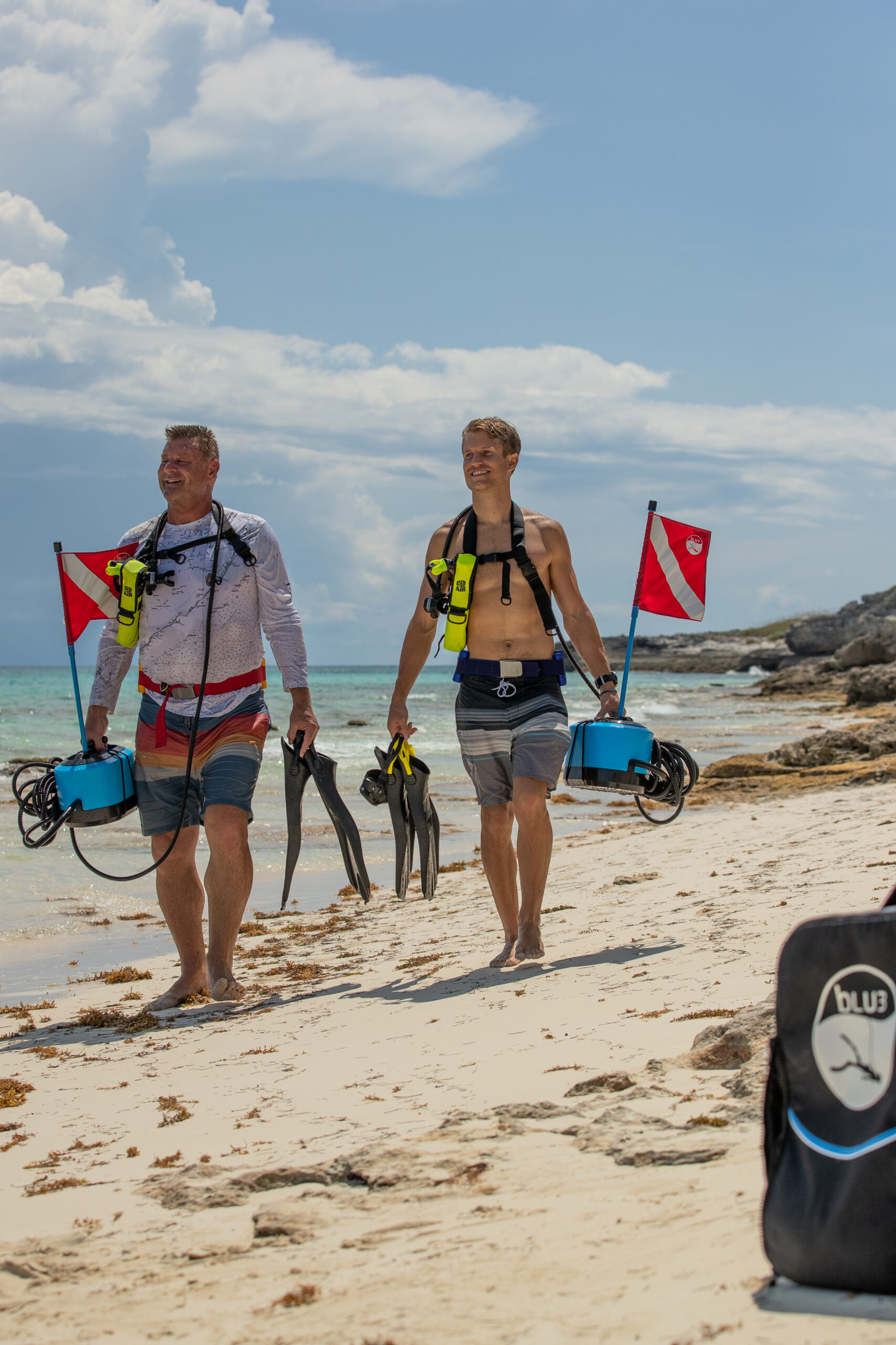
Portable Adventure
Lightweight portability makes BLU3 easy to bring aboard sailboats, catamarans, paddleboards, RV trips, and flights.
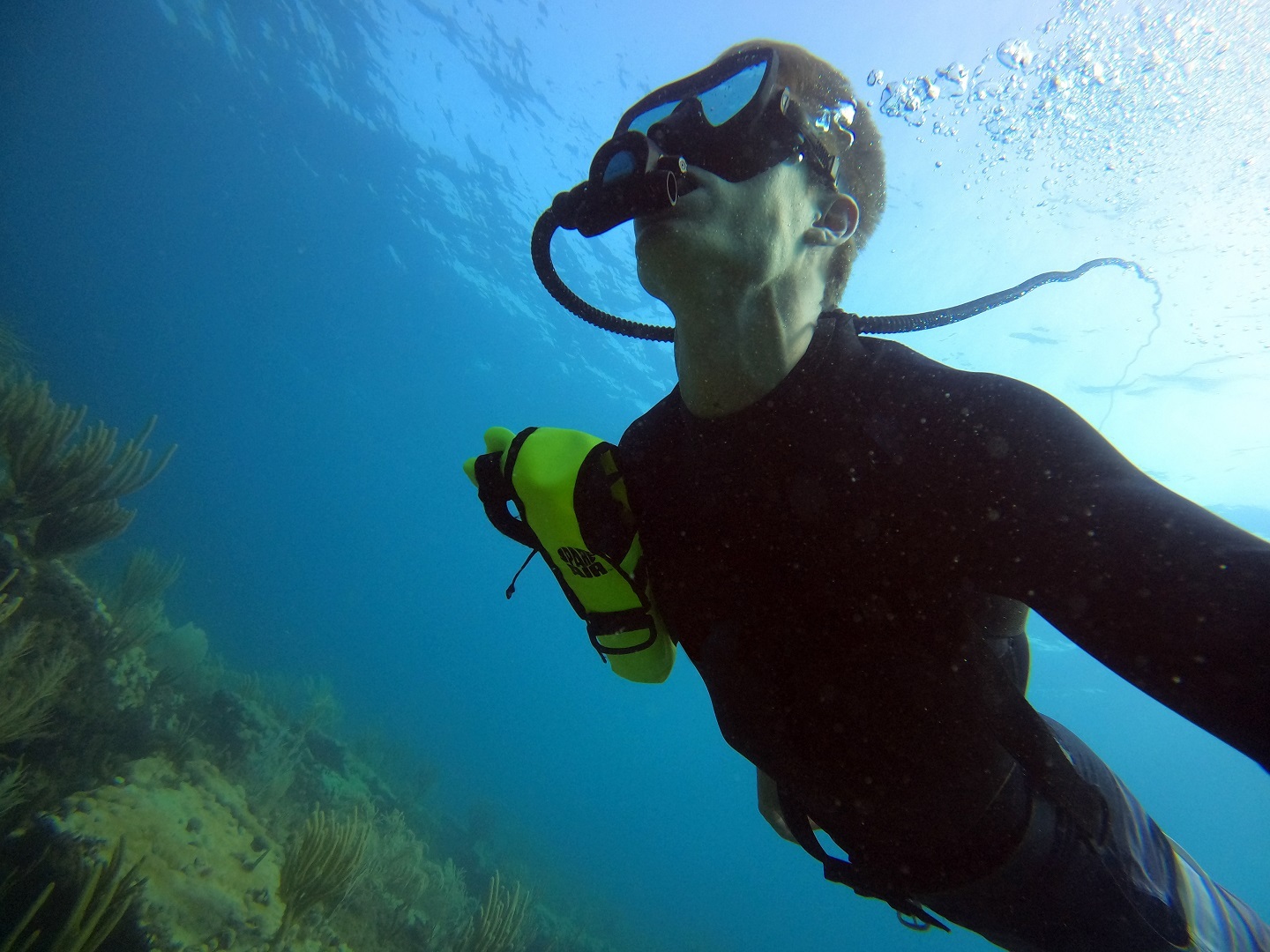
Backup Air Integration
Some divers pair BLU3 systems with Spare Air as an emergency backup air source while using BLU3 as the primary breathing system.
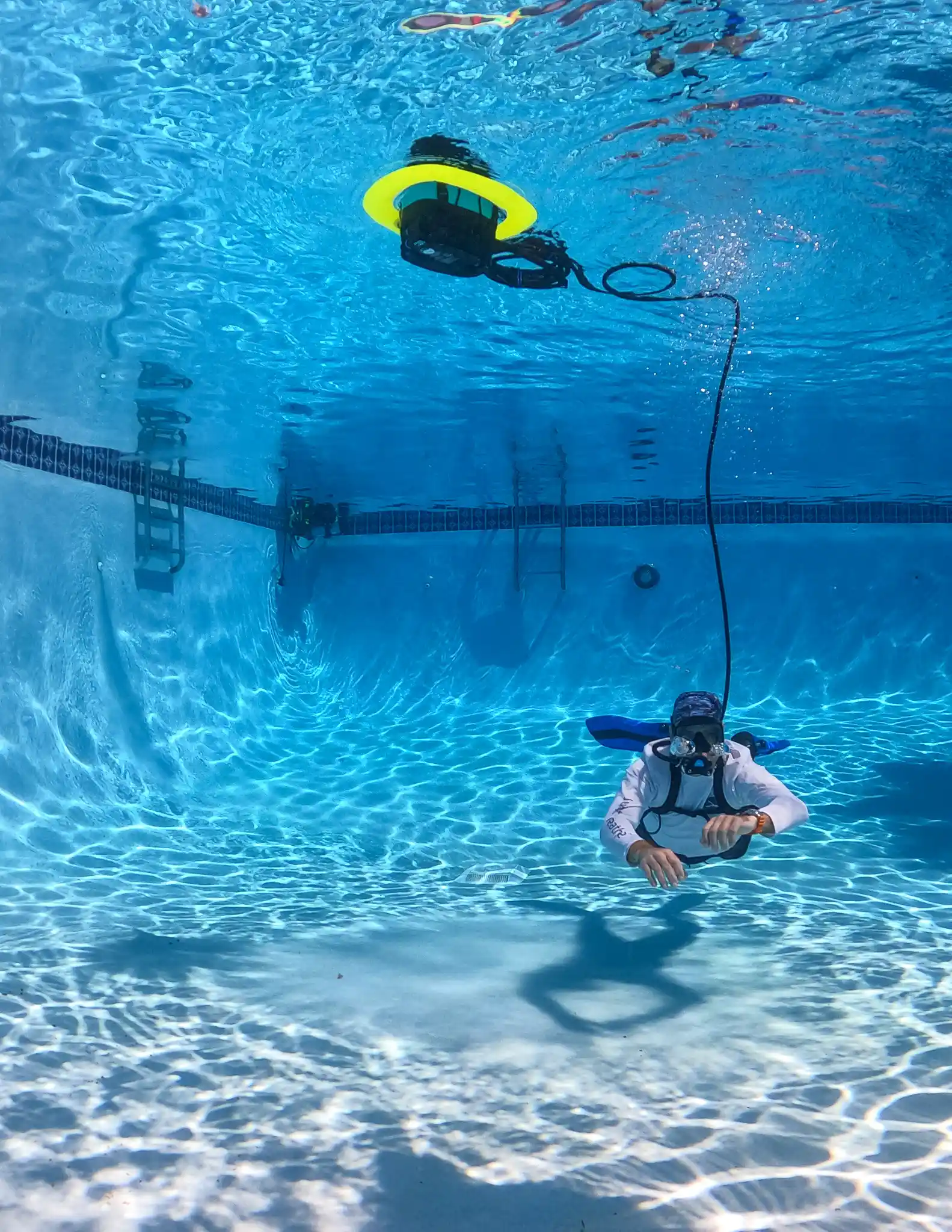
Pool Service & Inspection
BLU3 systems are also used for pool inspections, underwater maintenance, leak detection, and cleaning applications where lightweight portability is important.
Real Customer Reviews
Real feedback from BLU3 divers using Nomad, Nomad Mini, and Nemo systems for shallow-water diving, boat maintenance, underwater photography, and travel.
Watch BLU3 Nomad Testing
Joe Oceanside tests the BLU3 Nomad in real-world conditions and shares his thoughts on portability, runtime, and shallow-water usability.
“As I commented earlier on FB, I own one and absolutely love it. My wife and I both used it in the Bahamas and the Virgin Islands. We have been avid scuba enthusiasts for over forty years. Our BLU3 system is perfect for shallow dives as it frees us up from lugging all the required equipment related to scuba. It’s the same experience as skin diving without having to surface. You hardly know it is there. We are retired and travel often so another great advantage is the compact BLU3 system is allowed as carry on when flying!”
— Hal Lawson“Just starting with my nomad mini – three dives in and loving it. Really well designed, feels very stable and safe. I dive in shallow water to do u/w surveys in Greece and a tank would be really cumbersome in these conditions. This system is perfect for what I need, to be able to stay still on the seabed and measure/photograph seahorses, without stressing them out with freediving up and down constantly. Also the team in Florida are so responsive and helpful, very much recommend.”
— Susan Smillie“I’ve been using the Nomad Mini to clean my hull for a couple years now, and I love it. It’s a quality product, easy to use, and I recommend it personally.”
— Paul Trammell“Having used a Nemo for several years, my friends and I decided to upgrade to the Nomad Mini. Easier to use, and better for cleaning sailboats, as 5 feet makes a material difference. I cannot say enough good things about the product support, and development.”
— Dan Flagler“I bloody love Blu3! I own a boat and it is brilliant for diving under the boat to remove ropes (oops) around the prop and check the intakes. And then you can chase after fish. fabulous”
— Lawson SteeleDiscover Modern Tankless Diving
Whether you started by searching for a mini scuba tank, portable scuba tank, Nemo alternative, or underwater breathing device, many divers eventually discover that battery-powered tankless dive systems offer a more practical solution for shallow-water diving and marine adventures.
Frequently Asked Questions
How long do mini scuba tanks last?
Many mini scuba tanks only hold around 3 to 6 cubic feet of air, which may provide roughly 2–5 minutes of usable breathing time depending on depth and breathing rate.
What is a tankless dive system?
A tankless dive system supplies breathing air from the surface through a hose instead of storing compressed air inside a large scuba cylinder worn by the diver.
Are BLU3 systems scuba tanks?
No. BLU3 systems are battery-powered surface-supplied diving systems designed for shallow-water diving, underwater exploration, boat maintenance, and portable diving applications.
Can BLU3 systems be used for boat maintenance?
Yes. Many boat owners use BLU3 systems for hull cleaning, propeller inspections, rope removal, underwater inspections, and shallow-water maintenance.
How deep can BLU3 systems dive?
BLU3 Nomad and Nomad Mini systems are designed for shallow-water diving with a maximum depth of up to 30 feet.
Can I travel with BLU3 systems?
BLU3 systems are designed for portability and are commonly used on boats, paddleboards, RV trips, and travel adventures.
What is the difference between BLU3 and mini scuba tanks?
Mini scuba tanks store a very limited amount of compressed air directly inside a small cylinder. BLU3 systems instead supply air continuously from a floating battery-powered surface unit, allowing for much longer shallow-water dive sessions.
What is Brownie’s Third Lung?
Brownie’s Third Lung systems are floating surface-supplied diving systems designed for extended dive sessions, family diving, lobstering, and multi-diver underwater applications.