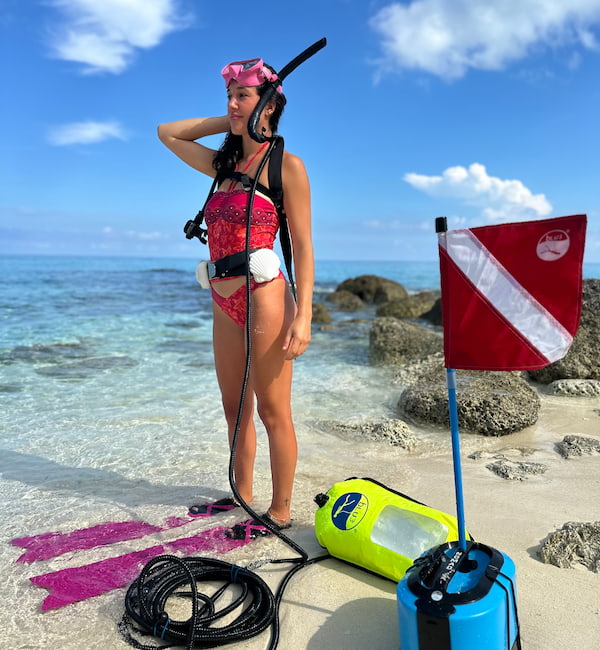
Portable breathing gear shapes every underwater adventure, yet conventional mini scuba diving tanks like Lung Tank often limit freedom with short durations and bulky refills. This guide reveals how modern tankless dive systems, exemplified by the BLU3 Nomad, deliver continuous surface-supplied air from a lightweight compressor, revolutionizing shallow exploration by serving as a true primary air source. You will gain foundational knowledge of mini scuba tanks, an in-depth overview of BLU3 technology, direct performance comparisons, cost analysis, and clear decision factors. We’ll explore key use cases, from recreational snorkeling to boat hull inspections, so you can choose the ideal solution for your next underwater excursion. For a side-by-side comparison table, see our Lung Tank vs BLU3 guide.
This comprehensive comparison unites definitions, mechanics, safety considerations, portability assessments, maintenance insights, and long-term value analysis. Whether you’re evaluating a lung tank for emergency backup air or seeking the flexibility of a BLU3 tankless system as your primary air source, this resource equips you to weigh depth ratings, dive durations, logistics, and training requirements. By examining real-world scenarios and BLU3’s unique innovations—like Smart Reg™ and swappable battery packs—you’ll understand the practical benefits and limitations of each option. Let’s dive into the essentials of portable diving solutions and discover which gear unlocks your best underwater experience.
What Is a Lung Tank or Mini Scuba Tank? Definition, Types, and Common Uses
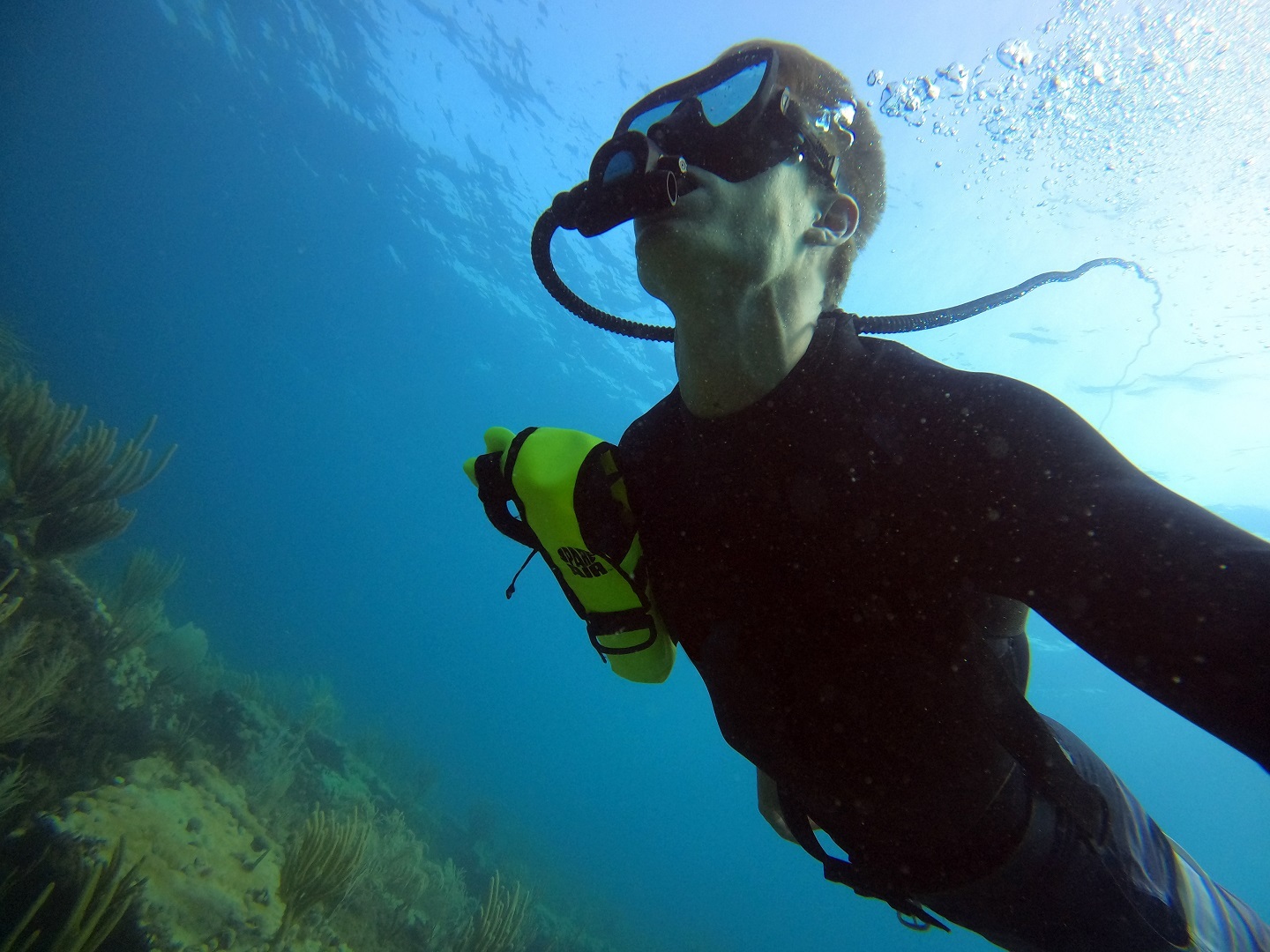
A Lung Tank or mini scuba tank is a compact compressed air cylinder designed to supply breathable gas for short-duration, shallow water excursions by holding pressurized air for immediate use. These small dive cylinders typically range from 0.5 to 2 liters in capacity and function primarily as emergency air sources, never as a primary air supply. Although some brands in recent years have marketed them as quick inspection tools or lightweight alternatives for snorkelers seeking brief, extended submersion, their limited capacity makes them unsuitable for continuous primary use.
They are designed for emergency or backup situations, not as a primary means of breathing underwater. Understanding typical sizes leads to evaluating operational methods and trade-offs in the next section.
What Are Mini Scuba Tanks and Their Typical Sizes?
Defining mini scuba tanks by volume clarifies how capacity influences dive duration and portability, emphasizing their role as emergency backup.
| Tank Model Examples | Capacity (L) | Typical Use Case | Approx. Dive Time (at 10 ft) |
|---|---|---|---|
| Spare Air 3 cu ft, Lung Tank T-500) | 0.5 (approx. 3 cu ft) | Emergency air for shallow water | 3–4 minutes |
| Spare Air 6 cu ft, Lung Tank T-1000 | 1.0 (approx. 6 cu ft) | Backup breathing on deeper scuba dives | 6–8 minutes |
These durations are significantly shorter than often claimed in marketing and highlight their exclusive role as backup or emergency air sources, never for primary diving. Actual dive times will be shorter than shown in the table above for users if breathing heavily. You can view a detailed comparison of mini scuba tanks and tankless systems in our Lung Tank vs BLU3 comparison page.
Experienced divers with lower surface air consumption (SAC) rates may extend their usable time somewhat, often gaining an extra minute or two of duration at similar depths by maintaining calm, controlled breathing and minimizing movement. However, even under ideal conditions, these cylinders are only suitable for very short dives or emergency ascents.
It’s also worth noting that Lung Tank explicitly prohibits using their products beyond 3 meters (10 feet), and their Sub-Mask accessory is limited to just 2 meters (6.5 feet) of depth according to the manufacturer’s own documentation. These limits make Lung Tank unsuitable for even modest shallow-water exploration where depth variation exceeds those thresholds. Customers should also be aware that Lung Tank products are manufactured in China, despite being marketed by a company based in Australia. Warranty and service options are very limited — Lung Tank does not offer local repair support or dealer-based warranty handling, and most dive shops are unfamiliar with their systems. As a result, users are often on their own for parts replacement or troubleshooting.
How Do Mini Scuba Tanks Work for Shallow and Emergency Dives?
Mini scuba tanks operate like full scuba cylinders on a reduced scale, storing compressed air at high pressure (200–300 bar) and delivering it through a demand regulator. A diver inhales ambient air from the tank, which passes through a regulator that reduces pressure to breathable levels. In shallow waters under 15 feet, lower ambient pressure allows efficient air consumption, but mini tanks are still not suitable as a primary air source for equipment checks or recreational diving. Their self-contained mechanism grants immediate independence from surface support, unlike tethered systems, but only for very brief, critical moments. They are not designed for continuous primary breathing.
This self-sufficiency makes mini tanks a trusted backup when standard scuba gear malfunctions. However, they lack continuous refilling options underwater and rely on pre-dive fills from onboard compressors or hand pumps. Mini tanks should never be fully emptied; divers must retain 10–15% of pressure to prevent internal corrosion and regulator damage, although in a true emergency, it is appropriate to breathe a Spare Air tank completely empty. It is crucial to remember that mini tanks are strictly for emergency or backup use, not as a primary air source for any dive.
What Are the Key Characteristics of Mini Scuba Tanks? Air Capacity, Weight, and Refilling Methods
Mini scuba tanks combine compact form factors with specific operational attributes that influence performance, strictly for backup or emergency use:
- Air Capacity and Dive Time: A 1 liter cylinder (approx. 6 cu ft) typically provides 6–8 minutes of air at shallow depths, suitable only for brief emergencies.
- Weight and Portability: Empty weights range from 2 to 4 pounds, often carried on a harness or in a belt mount, making them convenient for backup.
- Refilling Methods: Cylinders refill via portable hand pumps, electric compressors, or by connecting to full-size scuba tanks with adapters.
- Full-Face Masks: Full-face masks, often sold with mini tanks, are buoyant, making it difficult for first-time divers to stay underwater without a weight belt. This increases breathing effort and shortens air time, further limiting their utility as anything other than an emergency device.
Balancing these factors ensures you select a tank that meets your dive objectives without unnecessary bulk or complexity, primarily for backup or emergency use, never as a primary air source.
Next, we’ll address safety considerations inherent to mini scuba tanks.
What Limitations Are Associated with Mini Scuba Tanks?
Mini scuba tanks have limited capacity which means divers must monitor pressure vigilantly to prevent rapid depletion. Deeper depth increases air consumption, making mini tanks unsuitable for moderate to deep dives and certainly not for primary air supply. Additionally, refills require proper equipment and training—an improperly filled cylinder can introduce contaminants or excessive pressure. Users must also confirm regulator integrity to avoid free-flow or failure incidents underwater. The requirement to retain 10-15% pressure also limits usable air, except in true emergencies.

What Are BLU3 Tankless Dive Systems and How Do They Work? Overview and Technology Explained
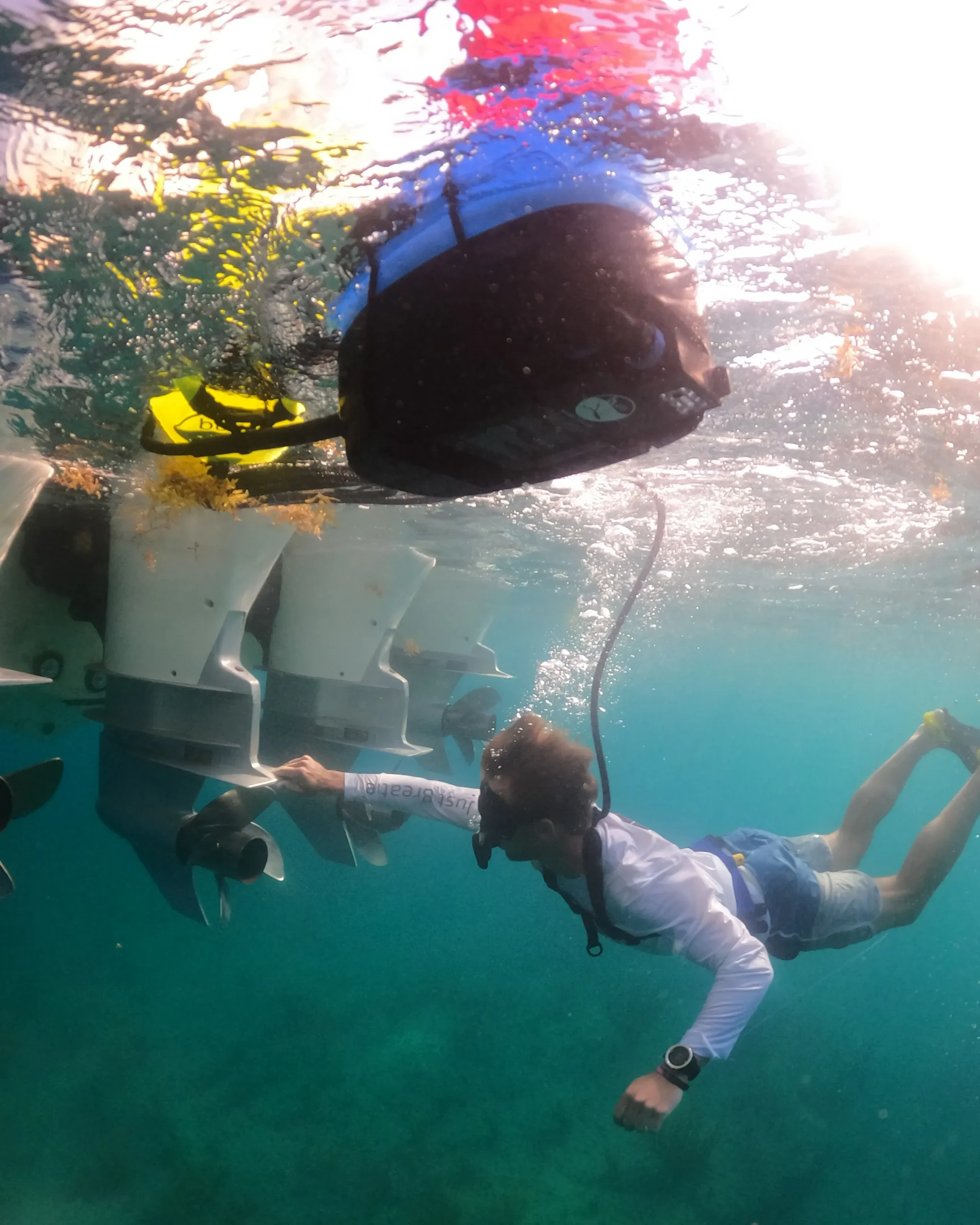
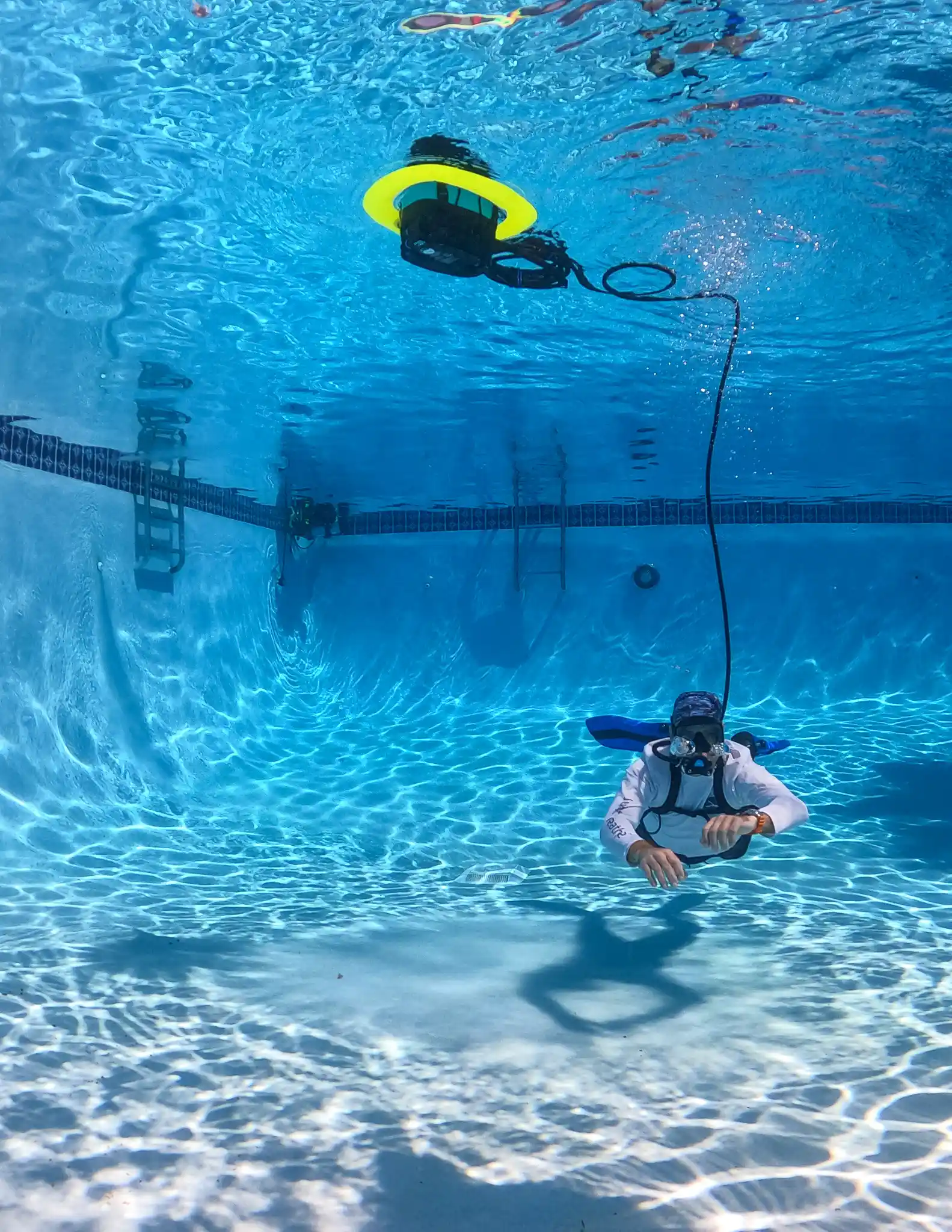
A tankless dive system like the BLU3 Nomad provides continuous surface-supplied air via a floating, battery-powered compressor, eliminating the need for back-mounted tanks. Air is drawn from ambient surroundings, compressed through a proprietary oil-free piston compressor, and delivered to the diver through a low-drag hose and Smart Reg™ breathing regulator. This mechanism ensures uninterrupted breathing gas supply for as long as the compressor remains powered, transforming the diving experience for shallow water exploration by providing a true primary air source. BLU3’s technology extends beyond simple compressors by integrating intelligent pressure regulation, thermal management, and airline-approved batteries. Understanding the core design principles explains why this approach outperforms traditional mini tanks in many scenarios, establishing BLU3 as a superior primary air solution for shallow diving.
How Does the BLU3 Nomad Dive System Provide Surface Supplied Air?
The BLU3 Nomad functions by floating on the water’s surface and drawing ambient air through an intake. A proprietary oil-free piston compressor draws ambient air and delivers low-pressure surface-supplied air slightly above ambient pressure through a 9 mm air hose to a diver’s regulator. Smart Reg™ technology maintains consistent delivery pressure, adapting flow to breathing patterns and preserving battery life. This system enables dives up to 30 feet (9 m) with no on-demand cylinder changes and supports uninterrupted exploration until the battery or swap system requires attention, making it an ideal primary air source for extended shallow water activities.
What Are the Features and Specifications of BLU3 Nomad and Nomad Mini?
| Model | Weight (lbs) | Depth Rating | Battery Runtime | Key Benefit |
|---|---|---|---|---|
| BLU3 Nomad | 15 | 30 feet (9 m) | 45–60 minutes per pack | Extended, surface-supplied primary air |
| BLU3 Nomad Mini | 12 | 15 feet (4.5 m) | 40–45 minutes per pack (up to 120 minutes with DiveBoost Kit) | Ultra-compact primary air source |
Both systems include swappable, airline-friendly batteries, an ergonomic harness, and integrated online dive training materials.
These specifications highlight how BLU3 tailors dive time and portability to diverse user needs, offering a reliable primary air source for shallow diving.
What Training Does BLU3 Offer?
BLU3 offers access to their BLU3 Online Dive Training Course, which is free and available to everyone. This educational course covers equipment setup, emergency procedures, depth-limit awareness, and more designed to prepare users for responsible shallow diving as a primary air source, but it is not a formal scuba certification. Regular battery health diagnostics further reduce malfunction risk. BLU3 recommends scuba certification as well.
This robust training course builds confidence for new and experienced divers alike, bridging the gap between cylinder-based training and innovative surface-supplied methods for primary air.
How Portable and Travel-Friendly Are BLU3 Tankless Systems?
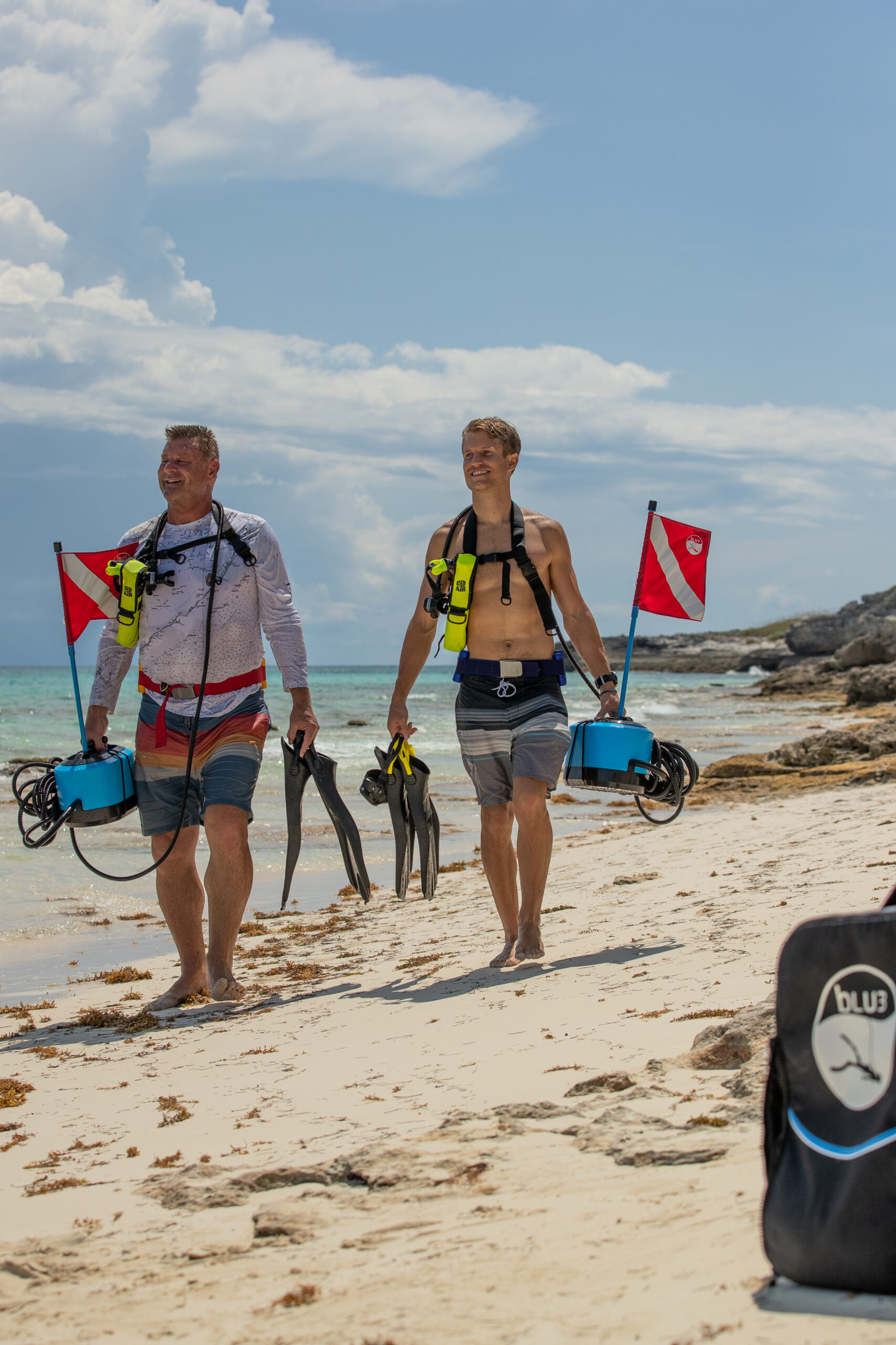
BLU3 systems redefine portability by eliminating heavy cylinders and introducing compact, carry-on approved battery modules. Each battery pack weighs about 1-3 pounds and meets airline regulations for 86 Wh (Nomad Mini) and 144 Wh (Nomad) lithium-ion cells. The entire unit packs into an airline-carry-on-sized backpack case, and quick-release harness components facilitate rapid assembly at remote dive sites.
By replacing multiple filled cylinders with a single rechargeable power source, BLU3 streamlines dive travel preparations and reduces dependency on shore-based fill stations, making it an ideal primary air source for travel.
How Do BLU3 Tankless Dive Systems Compare to Mini Scuba Tanks? Key Differences and Benefits
Comparing BLU3 tankless systems to mini scuba tanks reveals divergent performance, logistics, and user experiences. While mini tanks grant limited, self-contained air strictly for brief checks or emergency backup, BLU3 offers continuous supply for extended exploration as a primary air source without surface refill stops. Assessing critical attributes side by side highlights which solution aligns with your underwater objectives. See how Nomad and Nomad Mini stack up against mini scuba tanks in our comprehensive comparison chart.
What Are the Differences in Depth and Dive Duration Between BLU3 and Mini Tanks?
BLU3 Nomad delivers consistent air supply for the full battery cycle at depths up to 30 feet (9 m) for 45–60 minutes, serving as a reliable primary air source. In contrast, a 1 liter mini scuba tank (approx. 6 cu ft) only sustains a diver for roughly 6–8 minutes at 10 feet, making it suitable only for emergency backup.
| System | Depth Capability | Typical Dive Duration |
|---|---|---|
| BLU3 Nomad Tankless | 30 ft (9 m) | 45–60 minutes (Primary Air Source) |
| 1 Liter Mini Scuba Tank | Unspecified; Shallow | 6–8 minutes (Emergency Backup Only) |
Extended dive times with BLU3 allow thorough inspections and photography sessions as a primary air source, unlike mini cylinders that require frequent surface return for refills, limiting them exclusively to backup or emergency roles.
How Do Portability and Weight Compare Between BLU3 Systems and Mini Scuba Tanks?
Despite the compressor enclosure, BLU3 systems weigh approximately 15 pounds in use, distributed across a harness, providing a highly portable primary air source. Carrying multiple mini tanks to match BLU3’s dive time would exceed 20 pounds, and they would still only serve as limited backup. Mini tanks alone run 2–4 pounds each, but achieving multibattery runtime requires juggling several cylinders and refill gear. BLU3’s unified package simplifies transport and rigging without sacrificing dive duration, making it a more portable primary air source.

What Are the Air Supply and Refilling Differences? Surface Supplied Air vs. Compressed Air Tanks
BLU3 systems deliver uninterrupted surface-supplied air until battery or compressor limits are reached, with on-the-fly battery swaps for extended sessions, functioning as a continuous primary air source. Mini scuba tanks rely on finite stored gas that necessitates resurfacing or access to a compressor for replenishment, making them suitable only for backup or emergency use. Continuous air supply from BLU3 reduces dive planning complexity and eliminates refills between submersions, offering a superior primary diving experience.
How Do Safety and Training Requirements Differ Between BLU3 and Mini Tanks?
Both mini tanks and BLU3 systems require basic dive proficiency. BLU3’s free online dive course offers a unified training path for using it as a primary air source, while mini tank users must manage separate certifications for cylinder fills and regulator maintenance, strictly for backup purposes.The BLU3 course is educational and prepares users for responsible shallow diving but is not a formal scuba certification.
What Are the Ideal Use Cases for BLU3 Tankless Systems Versus Mini Scuba Tanks?
Mini scuba tanks excel exclusively as emergency backups, quick gear checks, and handheld inspection tools where a few minutes of air is sufficient for critical, brief moments. They are never to be used as a primary air source.
BLU3 Nomad shines as a primary air source in recreational snorkeling upgrades, boat maintenance dives, treasure hunting expeditions, and underwater photography where extended, uninterrupted air supply enhances productivity and enjoyment.
Who Benefits Most from Using BLU3 Tankless Dive Systems? Target Audiences and Use Cases
BLU3 Nomad’s design caters to diver profiles seeking convenience, versatility, and reliable primary air supply. Identifying who gains the greatest advantage ensures you select equipment aligned with your activities and expertise level.
Why Are Recreational Divers and Snorkelers Choosing BLU3?
Recreational divers often find transition from snorkeling frustrating due to tank bulk and short dives. BLU3 Nomad transforms snorkeling into extended underwater experiences by providing continuous air without heavy shoulders, enabling novices to explore reefs, swim-throughs, and shipwrecks confidently for up to an hour. This seamless upgrade supports skill development and sustained enjoyment as a primary air source.
How Do Boat Owners Use BLU3 for Hull Cleaning and Inspections?
Boat owners perform regular hull inspections and algae removal in shallow water where anchor-based compressors are impractical. BLU3 offers a portable, hands-free solution that powers hull cleaning tools and video inspection lights without return trips for compressed air. As a primary air source, the continuous supply reduces downtime, ensuring efficient maintenance and preventing marine growth.
What Advantages Does BLU3 Offer to Treasure Hunters and Underwater Photographers?
Treasure hunters and photographers require stable, extended dive windows to locate artifacts or frame shots in variable light. BLU3’s surface compressor delivers consistent air and supports camera housings, lighting rigs, and excavation tools without cylinder swaps. Reliable run times enable careful exploration of sandbars, reefs, and shipwreck sites without time pressure, making it an ideal primary air source.
How Does BLU3 Support Travel-Friendly Diving Adventures?
Travelers often face airline restrictions on tank baggage and limited fill stations abroad. BLU3’s airline-approved batteries and compact harness case empower divers to journey with minimal gear, charge batteries at hotels, and dive at remote locations without local compressor infrastructure. This portability opens new destinations for adventurous divers seeking a travel-friendly primary air source.
What Are the Cost Considerations When Choosing Between BLU3 and Mini Scuba Tanks? Long-Term Value Analysis
Evaluating upfront investments alongside ongoing expenses clarifies which system delivers the best return over time. While mini scuba tanks appear inexpensive initially, repeated fills and accessory purchases accumulate costs and hassle for what is strictly an emergency backup, whereas BLU3’s rechargeable power model amortizes across many dives, offering a more cost-effective primary air source.
How Do Initial Costs Compare Between BLU3 Systems and Mini Scuba Tanks?
- BLU3 Nomad dive system: Mid-range initial purchase covering compressor, harness, regulator, and battery, providing a complete primary air solution.
- Mini scuba tank package: Low-cost cylinder plus regulator but requires separate fill equipment or fill fees for what is only an emergency backup.
Although mini tanks seem budget-friendly, BLU3’s built-in compressor, safety features, and comprehensive training modules justify its higher upfront value as a primary air source, offering far more utility than a limited backup.
What Are the Ongoing Maintenance and Refilling Costs?
Mini tank owners spend on cylinder hydrostatic testing, regulator servicing, and frequent fill station fees or compressor rentals for their backup air. BLU3 operators incur periodic battery replacements if necessary and minimal maintenance—often less expensive than repeated cylinder fills, making it a more economical choice for a primary air source.
How Does Battery Life and Replacement Impact BLU3’s Cost Efficiency?
BLU3 batteries typically endure over five hundred charge cycles before replacement. With proper charging practices, the cost per dive decreases over time as each battery supports dozens of dives. Comparing average fill costs per dive for emergency backup mini tanks to amortized battery expenses reveals BLU3’s long-term savings for frequent users, making it a more economical primary air source.
What Are the Advantages and Limitations of Tankless Diving Systems Compared to Mini Scuba Tanks?
Understanding both strengths and trade-offs of tankless dive systems ensures realistic expectations and proper equipment selection.
What Are the Main Advantages of Tankless Dive Systems Like BLU3?
- Extended Dive Time – Continuous air supply outlasts fixed-capacity cylinders, serving as a primary air source.
- Portability – Small travel-friendly backpack fits everything with straps for fins on the side.
- Simplicity – No pre-dive fills or cylinder storage required for your primary air supply.
What Limitations Should Divers Consider with Tankless Systems?
- Depth Restriction – Performance optimized for 30 feet (9 m) or less.
- Tethered Operation – Hose connection limits range from the compressor float.
- Battery Dependence – Requires scheduled recharging or spares.
Divers must plan around these constraints to maximize safety and performance when using BLU3 as their primary air source.
How Do Mini Scuba Tanks Address Specific Diving Needs Despite Their Limitations?
Mini tanks excel when tethered gear is impractical—such as confined spaces or drift swims—and serve as reliable backup air sources on scuba dives. Their self-contained nature allows localized use without float-barrier concerns and supports independent travel when batteries cannot be charged. They are best suited for emergency or backup use only, never as a primary air source.
How to Choose the Right Dive System for Your Underwater Adventures? Decision Factors and Recommendations
Selecting between BLU3 tankless systems and mini scuba tanks hinges on dive depth, duration, mobility requirements, and safety preferences, with a clear distinction between primary and backup air needs.
What Key Factors Should Influence Your Choice Between BLU3 and Mini Scuba Tanks?
- Depth Requirements: BLU3 excels up to 30 feet (9 m) as a primary air source; beyond that, consider full scuba with Spare Air for backup.
- Dive Duration: Extended sessions favor BLU3 as a primary air source; short checks or emergencies strictly suit mini tanks for backup.
- Portability: Travel-focused divers benefit from BLU3’s carry-on batteries for their primary air; local users may prefer mini cylinders for emergency backup.
- Refilling Logistics: Remote dive sites with no fill stations lean toward tankless solutions as a primary air source.
How Does Your Diving Activity Affect the Best Equipment Choice?
Recreational explorers and photographers find continuous supply invaluable, making BLU3 their primary air source, while snorkelers on casual trips may find a small mini tank sufficient for emergency backup. Boat maintenance crews often choose tankless systems for power tool integration as their primary air source, whereas cave or wreck divers requiring directional independence lean toward self-contained cylinders for primary air, with mini tanks as backup.
Where Can You Discover and Purchase BLU3 Tankless Dive Systems?
You can buy BLU3 Nomad and Nomad Mini directly from BLU3 or through authorized dive retailers. Use the dealer locator to find a nearby shop for hands-on demos, and remember the BLU3 Online Dive Training Course is free to everyone, no purchase required. BLU3 continues the Brownie’s Third Lung legacy that began in 1969, bringing modern, battery powered, surface supplied diving to shallow water explorers.
Related options from the same family of brands:
- Spare Air, the trusted mini tank for emergency backup air, ideal as a contingency with any primary system
- Easy Dive by Submersible Systems with Snorkelator, for divers who prefer traditional scuba with a practical air supply and easy switch between snorkel and regulator
- Brownie’s Third Lung multi-diver systems, for boats and teams that want extended, surface supplied diving for more than one person
Frequently Asked Questions
What are the main differences in maintenance between mini scuba tanks and BLU3 systems?
Maintenance for mini scuba tanks, used strictly for emergency backup, typically involves regular hydrostatic testing, regulator servicing, and frequent refills, which can add up in costs and time. In contrast, BLU3 systems, designed as a primary air source, require minimal maintenance, primarily focusing on battery health and a freshwater rinse after use. The rechargeable batteries can last for several hundred charge cycles, making them more cost-effective over time. This difference in maintenance requirements can significantly influence a diver’s choice based on convenience and long-term investment.
Can BLU3 systems be used for deep diving?
BLU3 systems are optimized for shallow water diving, with a maximum depth rating of 30 feet (9 m). While they provide air supply for extended periods as a primary air source, they are not designed for deeper dives where the risks of increased air consumption and other complications increase. For deeper diving, traditional scuba tanks are recommended, with mini tanks serving only as emergency backup.
What types of accessories can enhance the use of BLU3 systems?
BLU3 systems, as a primary air source, can be enhanced with various accessories to improve the diving experience. Common accessories include underwater cameras for photography, lighting rigs for better visibility, and specialized tools for underwater maintenance tasks. Additionally, divers may consider extra battery packs for extended dive sessions, ensuring they have a continuous air supply without interruptions. For the Nomad Mini, the DiveBoost Kit can extend runtime up to 120 minutes. These accessories can significantly enhance functionality and enjoyment during dives.
How does the cost of ownership compare between BLU3 systems and mini scuba tanks?
While the initial purchase price of a BLU3 system may be higher than that of mini scuba tanks, the long-term cost of ownership often favors the BLU3. Mini tanks, used only for emergency backup, incur ongoing expenses for refills, maintenance, and hydrostatic testing, which can accumulate significantly over time. In contrast, BLU3 systems, as a primary air source, primarily require battery replacements and minimal maintenance, leading to lower overall costs for frequent divers. This makes BLU3 a more economical choice for regular underwater activities as a primary air source.
Conclusion
Lung tanks and mini scuba cylinders deliver compact, self-contained air for brief shallow dives but require careful refill management and strict monitoring of limited capacity, making them ideal for backup or emergency use only, never as a primary air source. BLU3 tankless dive systems transform portability, offering continuous surface-supplied air, intelligent regulation, and proven safety features that extend underwater time without heavy gas cylinders, serving as a true primary air source for shallow water exploration. By weighing depth needs, duration expectations, logistical constraints, and cost over time, divers can select the optimal gear—whether an emergency backup cylinder or a BLU3 Nomad that redefines shallow water exploration as a primary air source. Choose the solution that best supports your adventure and safety priorities beneath the waves. To summarize key differences and find the right solution for your needs, visit our Lung Tank vs BLU3 detailed comparison.