
Electric SUP Motor vs. External Kits: Why Integrated Design Wins
As stand-up paddleboarding continues to grow in popularity, so does the technology designed to enhance the experience. Choosing between an electric SUP motor vs external kit is one of the key decisions prospective paddleboarders face. Each option offers unique benefits, but integrated electric motors notably improve performance, efficiency, and user experience.
JAYKAY is a leading innovator in electric paddle board propulsion, and BLU3 is proud to offer their products as an authorized distributor.
What Is an Integrated Electric SUP Motor?
How the JAYKAY e-Fin 2.0 Embeds Power Inside the Fin
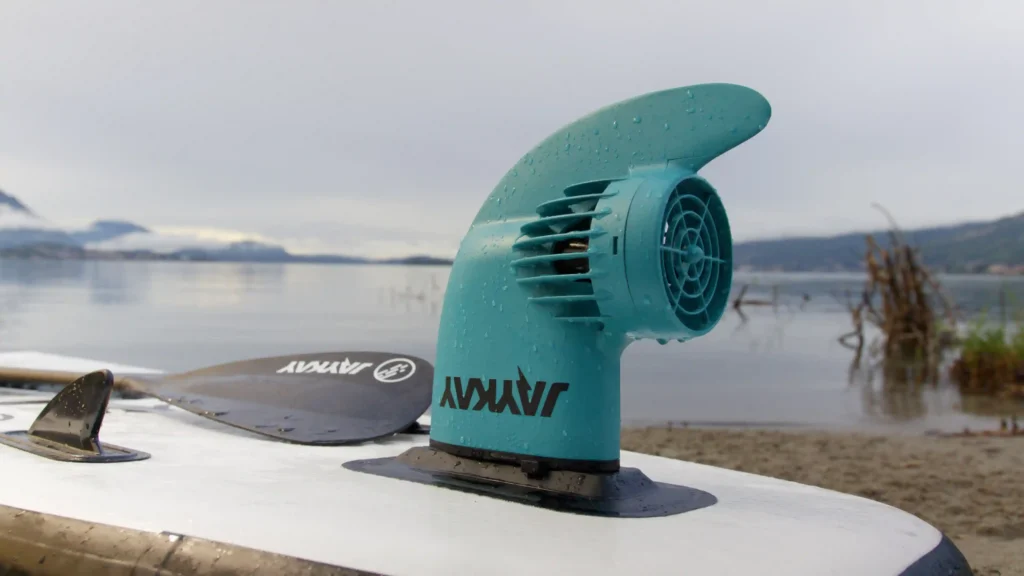
The integrated electric SUP motor represents a seamless approach to propulsion technology. Specifically, the JAYKAY e-Fin 2.0 embeds the motor directly inside the fin itself, creating an elegant, streamlined system. The battery is housed separately on the board to maintain optimal balance and accessibility. This design eliminates external attachments that disrupt the board’s natural hydrodynamics and balance. The internal motor housing protects the motor from exposure to water, impacts, and the elements, while the compact footprint reduces drag and enhances handling. The e-Fin 2.0 boasts optimized power delivery, offering paddlers sustained speed and efficiency without compromising board aesthetics or stability.
What Is an External Motorized Paddle Board Conversion Kit?
Conversely, a motorized paddle board conversion kit typically involves adding an external motor, battery box, and wiring to a traditional SUP. These bolt-on kits attach to the underside or rear of the board and often require manual installation of various components. While external kits offer a flexible solution for motorizing existing boards, they add bulk and can affect the paddleboard’s hydrodynamic profile. Managing wiring and external batteries can complicate setup and limit portability. Despite being a popular entry point for electric propulsion, external kits may introduce compromises in performance and handling compared to integrated electric fin advantages.
Hydrodynamics: The Hidden Cost of External Kits
How External Motors Can Affect Drag and Speed
External motors mounted under or behind a paddleboard can increase water resistance by adding irregular surfaces and protrusions. These components may interfere with smooth water flow, potentially increasing drag. For example, a motor box protruding beneath the board can disrupt the laminar flow of water, causing turbulence which translates into greater energy required to maintain speed. This added resistance can reduce the efficiency of the motor and shorten battery life as it compensates for these factors.
Moreover, the shape and placement of external motors sometimes cause uneven flow separation and vortices around the motor housing, which not only impacts battery power consumption but also can create unwanted vibrations and noise. The resulting paddling experience might feel heavier or less responsive compared to clean, integrated setups. In contrast, the smooth contours of an integrated fin like the JAYKAY e-Fin 2.0 help maintain hydrodynamic efficiency, allowing for better speed and maneuverability.
SUP Motor Drag Considerations: Integrated vs. Bolt-On
Integrated electric fins like the JAYKAY e-Fin 2.0 are designed to align with the natural shape of the board, maintaining laminar water flow and reducing drag forces. This design supports enhanced efficiency and smoother rides. By comparison, bolt-on motors typically add components that can increase drag, affecting speed and energy consumption, which is an important factor for longer paddleboarding sessions.
| Feature | JAYKAY e-Fin 2.0 Integrated Design | External Motor Conversion Kit |
|---|---|---|
| Motor Placement | Motor integrated directly into the fin | Motor mounted externally on the board |
| Hydrodynamics | Designed to maintain smooth water flow | Additional components may increase drag |
| Board Tracking | Maintains natural board handling characteristics | Weight placement may affect tracking |
| Weight Distribution | Balanced, low-profile design | Battery and motor placement can alter balance |
| Installation | Quick installation using compatible fin box | May require mounting hardware and setup |
| Portability | Compact system with fewer external components | Additional components increase transport complexity |
| Appearance | Clean, integrated look | Visible wiring, mounts, and battery components |
| Durability | Motor protected within fin housing | External components are more exposed |
| Maintenance | Simple cleaning and inspection routine | May require additional inspection of wiring and mounts |
| Best For | Touring, recreation, travel, and everyday paddling | Retrofitting existing boards and DIY installations |
How Board Tracking and Stability Can Be Affected by External Mounts
The addition of external motors and batteries can impact a paddleboard’s tracking—its ability to maintain a straight path. External weight can disrupt the balance, sometimes causing the board to veer or require more corrective strokes. This effect can reduce paddling efficiency and increase physical effort. Users may notice that with some external motors, maintaining a straight course requires more attention and re-alignment, which can become tiring over long distances.
These external attachments may also affect the board’s response during turns. The added bulk and shifted weight distribution can make maneuvering feel less responsive, particularly in choppy water. Integrated fins, placed centrally in the design, are able to maintain the board’s natural tracking and stability, allowing for confident control in various water conditions. This highlights some of the integrated electric fin advantages that contribute to better performance and less paddler fatigue.
Weight Distribution: Why Center of Gravity Matters
How Integrated Fins Maintain Natural Board Balance
A key integrated electric fin advantage lies in preserving the paddleboard’s center of gravity. By embedding the motor within the fin, weight remains low and centered, while the battery placement on the board is strategically managed to maintain balance. This placement supports natural board dynamics, enhancing responsiveness and reducing fatigue. With weight concentrated closer to the middle and lower on the board, paddlers experience a stable platform that feels intuitive and predictable. This helps maintain proper posture and reduces muscle strain, especially on longer excursions.
Moreover, the strategic weight distribution provided by integrated fins contributes to greater forward momentum with less energy input. Because the board sits evenly in the water, turning and gliding require less effort. This positive user experience difference often leads to increased enjoyment and longer sessions on the water.
Potential Weight Distribution Challenges with External Battery Boxes
External kits often mount battery boxes on the deck or the rear of the board, which can introduce uneven weight distribution. This shift in balance may cause instability, particularly in choppy water or during turns. For instance, a battery pack positioned near the tail can raise the overall center of gravity, making the board feel less steady. Paddlers might notice a tendency for the nose to lift or for the board to wobble when accelerating or decelerating.
Additionally, the added bulk can complicate transport and storage. Carrying a board with a heavy, awkwardly placed battery box can be cumbersome, and weight placement is a practical consideration of external motorized paddle board conversion kits that can impact performance and enjoyment. These factors might discourage users from pushing boundaries or exploring more challenging waters.
Aesthetics & Stealth: The “Invisible” Motor Advantage
Why Integrated Designs Look Like a Standard SUP
Integrated electric fins provide a sleek, minimalist appearance that is virtually indistinguishable from a traditional paddleboard. The absence of visible wires, bulky battery packs, and mechanical attachments means users enjoy a cleaner, stealthier look. This “invisible” motor advantage appeals strongly to paddlers who prefer a natural aesthetic or want to avoid drawing attention when paddling in serene or protected environments.
This visual simplicity is not only attractive but also helps reduce unwanted attention in public and natural settings, preserving the peaceful paddleboarding experience. For example, wildlife is less likely to be disturbed, and users often report feeling more connected to their surroundings without the distraction of external equipment. Furthermore, integrated designs contribute to a streamlined silhouette that can be advantageous when storing or transporting the paddleboard.
The Visual Clutter of Wires, Boxes, and External Mounts
External kits add visual elements such as exposed wires, battery enclosures, and mounting hardware. This can detract from the board’s aesthetics and potentially make transportation and handling more awkward. The cables may hang or snag on gear, docks, or vegetation, causing inconvenience and possible damage. Moreover, these components can be prone to snagging or damage, which may diminish the user experience and the board’s appeal.
In addition, the presence of external motors can alter perceptions of the paddleboard, making it look bulkier or less refined. For users who appreciate a minimalist style or who want equipment that integrates naturally with their lifestyle, this can be a drawback. The greater ease and subtlety of integrated fins thus present a clear advantage in terms of both form and function.
Portability: Travel Without the Bulk
No External Battery Boxes, No Tangled Wires
Integrated systems like the JAYKAY e-Fin 2.0 simplify traveling with and storing your paddleboard. Without external battery boxes or wiring to manage, packing and transporting the equipment becomes more straightforward. This setup reduces concerns about damage during transport and makes handling easier in various scenarios such as airports, vehicles, and storage.
Additionally, the elimination of tangled cables reduces setup time and potential hassles during transport. Whether paddling along remote coastlines, camping by lakes, or navigating urban waterways, the integrated design offers adaptability to diverse travel scenarios. This convenience can encourage spontaneous adventures and supports a more active paddleboarding lifestyle.
Integrated Electric Fin Advantages for Travel and Storage
The compact design enhances portability without sacrificing power. The robust housing safeguards components from impact and exposure typical during travel. This convenience factor provides benefits over external kits, whose bulky parts add weight and complexity to transport and storage. For example, having an integrated fin reduces the risk of losing parts or forgetting components during trips.
In storage, integrated fins require less space and simplify maintenance routines. Boards can be stacked, transported on roof racks, or stored in tight storage areas without worrying about detaching or protecting fragile external units. This ease contributes to the overall user satisfaction and supports a more frequent and flexible paddling practice.
Durability: Protected vs. Exposed
How the JAYKAY e-Fin 2.0 Housing Shields the Motor
The JAYKAY e-Fin 2.0’s motor is encased in a rugged, waterproof shell designed to resist impacts, water intrusion, and UV rays. This protective housing ensures consistent performance over time and reduces maintenance needs. For detailed guidance on upkeep, consult resources on electric SUP motor maintenance. Regular electric SUP motor maintenance ensures long-term reliability and peak performance. By shielding sensitive components, integrated fins reduce the risk of failure or damage that external units may be more susceptible to.
This durable construction also protects against everyday stresses paddlers face—such as accidental bumps on rocks or docks, prolonged exposure to saltwater, and UV degradation from sunlight. The robust materials used in the e-Fin’s design improve long-term reliability, giving owners confidence that their investment will perform season after season with minimal service.
Vulnerability of External Units to Impact, Water, and UV
External motorized paddle board conversion kits leave vital components more exposed to environmental hazards. Battery boxes and wiring can be susceptible to knocks, saltwater corrosion, and sun damage. These vulnerabilities often translate into higher maintenance requirements and potentially reduced system longevity. For example, exposed wiring can corrode or fray, leading to electrical issues or failure mid-ride.
Additionally, external placement increases the chance of accidental disconnections or jams during rides. Rough conditions or obstacles like branches or debris can damage protruding parts, resulting in more frequent repairs or replacements. Such maintenance challenges may detract from the overall enjoyment and reliability of the system.
JAYKAY e-Fin 2.0 vs Competitors: A Direct Comparison
Performance Benchmarks: Speed, Range, and Efficiency
Among integrated electric fin advantages, the JAYKAY e-Fin 2.0 is recognized for its power delivery and energy efficiency. Compared to other integrated fins and external kits, it generally provides strong top speeds, battery ranges, and energy consumption. These attributes contribute to extended ride times and enhanced user satisfaction, positioning it as a competitive option in electric SUP propulsion. Riders benefit from consistent thrust, smooth acceleration, and quieter operation versus many alternatives.
Installation Time: Minutes vs. Hours
The e-Fin 2.0 installs in minutes, snapping securely into the fin box without complicated wiring or additional components. This contrasts sharply with external motorized paddle board conversion kits, which often require hours of assembly, cable routing, and mounting procedures—raising the complexity for many users. Installation errors with external kits are common, leading to performance issues or safety concerns.
Maintenance Requirements Over Time
Maintenance for the JAYKAY e-Fin 2.0 is minimal due to its sealed, integrated design. Regular cleaning and periodic checks suffice to maintain optimal performance. External kits typically demand more frequent upkeep, including wire inspection, battery care, and hardware tightening, which can be inconvenient and time-consuming. The sealed nature of the e-Fin reduces exposure to dirt and water, further lowering maintenance demands and preventing corrosion.
Which Option Is Right for You?
When an Integrated Electric Fin Makes Sense
Paddleboarders seeking the highest performance, ease of use, and aesthetic appeal will benefit most from an integrated electric SUP motor like the JAYKAY e-Fin 2.0. This option suits users who prioritize long-term reliability, efficient battery use, and a natural paddling experience without added bulk. For instance, avid paddlers who frequently navigate diverse water conditions or travel with their boards will appreciate the seamless integration and portability.
Additionally, those who value minimal setup and maintenance or who desire to preserve the clean lines of their paddleboard will find integrated fins the best match. Professionals, tour operators, and environmentally conscious paddlers can also benefit from the stealth and durability that integrated fins provide.
When an External Kit Might Still Appeal
External motorized paddle board conversion kits might attract those on a budget or owners wishing to retrofit an existing board without replacing it. Despite their potential drawbacks, external kits offer a DIY-friendly method to add electric propulsion, though with trade-offs in hydrodynamics, weight distribution, and aesthetics. Beginners experimenting with electric SUPs or casual users who paddle short distances may find external kits sufficient.
Furthermore, paddlers who want the flexibility to remove their motor for storage or prefer swapping motors between boards might choose external kits. For those prioritizing initial cost savings over long-term performance, this can be a practical entry point into electric paddleboarding.
Conclusion: Why Integrated Design Wins for Most Paddle Boarders
Evaluating the electric SUP motor vs external kit options reveals clear advantages for integrated designs, especially embodiments such as the JAYKAY e-Fin 2.0. Integrated systems deliver superior hydrodynamics—minimizing drag and enhancing board tracking—and maintain ideal center of gravity, which improves stability and handling. Their stealthy aesthetics, ease of portability, and robust durability reduce maintenance challenges and extend product life. While external motorized paddle board conversion kits offer a flexible entry point to electric paddleboarding, they may fall short on many performance and convenience fronts.
For paddleboarders seeking the best riding experience, efficiency, and reliability, integrated electric fins represent the future of electric SUP technology, combining innovation with practical advantages that make every paddle more enjoyable.