
Surface supplied diving and traditional SCUBA diving both let you explore beneath waves, yet they rely on fundamentally different air-delivery methods, equipment setups, and use cases. Whether you’re a recreational diver seeking convenience or a boat owner needing quick hull inspections, understanding how each approach works will guide you to the best, most efficient option. In this article, you’ll discover:
- How self-contained SCUBA systems function and their key gear, certification path, and limitations
- What surface supplied diving means, its components, and how portable tankless systems fit into a recreational setting
- A side-by-side comparison of air-supply, mobility, communication, depth, and dive-time attributes
- The unique advantages of battery-powered, hose-fed tankless dive units like BLU3 Nomad and Nomad Mini
- Real-world insights into portability, boat-owner utility, and cost considerations
By mapping out these differences, you’ll see why modern surface supplied gear can improve access to underwater exploration through innovative technology and design.

What Is Traditional SCUBA Diving and How Does It Work?
Traditional SCUBA diving refers to carrying your breathing gas supply underwater in tanks attached to a regulator and buoyancy system. The diver inhales compressed air from self-contained cylinders via a two-stage regulator, manages buoyancy with a BCD (Buoyancy Control Device), and monitors depth and time with gauges or a dive computer. This independence allows freedom of movement but comes with gear bulk and finite bottom time.
SCUBA divers benefit from unfettered mobility and can reach moderate depths quickly, yet each dive is constrained by tank capacity and decompression rules. Mastering cylinder handling, regulator adjustments, and buoyancy control supports safe ascents and reduces the risk of barotrauma, making certification essential.
What Equipment Is Essential for SCUBA Diving?
Before entering the water, a diver must assemble several interdependent items to ensure safe breathing and movement:
- SCUBA Cylinder – A high-pressure tank holding breathing gas, typically aluminum or steel, that supplies air through the regulator.
- Regulator and Alternate Octopus – A first-stage attaches to the cylinder valve and reduces pressure; a second-stage demand valve delivers air on inhalation.
- Buoyancy Control Device (BCD) – A vest or jacket that inflates/deflates to control neutral buoyancy, allowing stable positioning underwater.
- Dive Computer or Depth/Gauge Console – Monitors depth, time, and decompression status to prevent nitrogen buildup beyond safe limits.
- Mask, Fins, Wetsuit/Drysuit – A low-volume mask for clear vision, fins for efficient propulsion, and a thermal suit for temperature regulation.
These elements work together to promote safe breathing, buoyancy management, and underwater navigation, though their combined weight and bulk can pose transport challenges.
What Are the Training and Certification Requirements for SCUBA?
Earning a SCUBA certification involves theoretical study, confined-water practice, and open-water dives under a recognized agency such as PADI or SSI. The process typically includes:
- Knowledge Development – Classroom or online modules covering dive physics, physiology, equipment, and safety protocols
- Confined-Water Skills – Pool sessions to practice regulator clearing, mask removal, emergency ascent, and buoyancy control
- Open-Water Dives – Four to six assessment dives in natural water to demonstrate competence in real-world conditions
Upon completion, divers hold an Open Water certification allowing dives to 60 feet. Advanced and specialty courses extend depth limits and teach rescue techniques. This certification foundation ensures divers understand air-management, environmental hazards, and emergency procedures.
What Are the Common Limitations of Traditional SCUBA Diving?
While SCUBA provides unrestricted mobility, it carries inherent constraints:
- Limited Air Supply – Standard aluminum cylinders typically support 40–60 minutes of dive time at recreational depths.
- Bulk and Weight – Tanks, BCDs, and supporting gear weigh 30+ pounds, complicating travel and gear handling.
- Certification Investment – Training courses and equipment rental or purchase represent significant time and financial commitments.
- Logistics – Transporting cylinders, refilling tanks, and managing gear maintenance adds operational overhead.
These factors can discourage casual snorkelers or boat owners from making every dive spontaneous, prompting interest in hose-fed alternatives that enhance simplicity and access.
What Is Surface Supplied Diving and How Does It Differ from SCUBA?
Surface supplied diving delivers breathing gas from a surface platform—often a compressor or high-pressure tank—through an air hose (umbilical) to the diver’s regulator or full-face mask. Unlike SCUBA’s self-contained cylinders, the diver remains tethered to an air source.
Traditional industrial surface supplied systems provide an uninterrupted air feed and integrated communications, reducing the risk of out-of-air emergencies. This configuration is common in commercial and scientific settings. Recreational users are increasingly option for modern surface supplied diving, often called “tankless” diving, devices where lightweight compressors replace bulk cylinders and provide air from the surface.
What Are the Key Components of Surface Supplied Diving Systems?
A typical industrial surface supplied setup comprises:
- Air Supply Unit – A compressor or high-pressure cylinder on a boat or shore that delivers breathable air.
- Umbilical (Air Hose) – A durable, pressure-rated hose connecting the surface unit to the diver’s regulator or mask.
- Regulator or Full-Face Mask – A demand valve or sealed mask interface that delivers air on inhalation and in some cases allows voice communication when fitted with a microphone.
- Bailout Cylinder (Optional) – A small emergency tank carried by the diver as an independent backup in case of surface supply failure.
- Communication Gear – Wired or wireless systems enabling real-time voice contact with the surface support team.
These parts integrate to support air delivery, in-water direction, and longer dive profiles without frequent ascents to change tanks. Modern tankless diving systems are simpler and do not involve things like communications.

How Does Recreational Tankless Diving Fit into Surface Supplied Diving?
Recreational tankless diving is a modern subset of surface supplied techniques, using compact, battery-powered air compressor units like the BLU3 Nomad and Nomad Mini. These systems float at the surface, draw ambient air, compress it, and feed divers through a lightweight hose. Their design eliminates heavy SCUBA cylinders, making them ideal for:
- Spontaneous Shallow-Water Exploration – Quick setup for reef swims and snorkeling-plus dives.
- User-Friendly Operation – Minimal equipment with small spare batteries makes diving simpler.
- Boat Inspections and Maintenance – Effortless underwater tasks without hauling tanks onboard.
By blending portability with surface air supply, recreational tankless systems expand access to shallow-water diving for exploration, maintenance, and training.
What Are the Typical Depth and Duration Limits for Surface Supplied Diving?
| System | Maximum Depth | Typical Bottom Time |
|---|---|---|
| BLU3 Nomad | 30 ft (9 m) | 45-60 minutes per battery |
| BLU3 Nomad Mini | 15 ft (4.5 m) | 35-40 minutes per battery |
| Standard Hookah | 20 ft (6 m) | Dependent on air source |
| Commercial SSD | 60+ ft (18+ m) | Up to 4+ hours with surface support |
Portable tankless units extend dive time with easy-swap batteries, allowing extended shallow exploration with multiple charged batteries and facilitating extended conservation or inspection work.
What Are the Main Equipment Differences Between Surface Supplied Diving and SCUBA?
Below is a detailed comparison of core equipment attributes to highlight how each method affects the diving experience:
| Attribute | Industrial Surface Supplied Diving | Modern Tankless Surface Supplied Diving (e.g., BLU3) | SCUBA Diving |
|---|---|---|---|
| Air Supply | Continuous feed from surface compressor or high-pressure tanks via umbilical | Air feed from compact, battery-powered surface compressor via hose | Self-contained tanks with fixed gas volume carried by the diver |
| Mobility | Diver tethered by hose; limited range but constant connection to surface support | Diver tethered by hose; limited range but constant connection to portable surface unit | Free movement; complete autonomy |
| Bulk & Weight (Diver Worn) | Minimal diver-worn weight; surface unit handles compressor bulk | Minimal diver-worn weight; portable unit floats on surface | Diver carries 30+ lbs of gear including tanks and BCD |
| Communication | Integrated voice or signal line to surface support | Typically limited to hand signals or slate communication | Typically limited to hand signals or slate communication |
| Maintenance Logistics | Surface unit service, hose checks, and compressor maintenance | Portable unit service, battery charging, and hose checks, etc. (see user manual) | Regular cylinder inspections, refills, and regulator service |
| Operational Features & Alerts | Live monitoring, bailout tank backup, direct surface contact | Low-battery alerts, optional bailout tank backup (recommended), free online training | Redundant second?stage octopus; dive computer alerts |
| Ideal Use Cases | Commercial diving, scientific research, extended commercial operations | Recreational shallow dives, boat inspections, underwater maintenance, pool service leak detection | Recreational deep dives, wreck penetration, autonomous excursions, technical diving |
How Does Air Supply Differ Between Surface Supplied Diving and SCUBA?
Surface supplied diving, both traditional and modern tankless, delivers breathing gas from a surface source. In the case of modern BLU3 tankless diving systems, the source is a mini air compressor designed specifically for diving. In contrast, SCUBA divers rely on pressurized cylinders with finite capacity; once the tank empties, the dive ends.
What Are the Mobility and Bulk Differences in Equipment?
SCUBA divers enjoy full 360° freedom, moving independently without a tether, but they carry all their gear—including tanks, BCD, and weights—through the water. Surface supplied divers, whether using traditional or modern tankless systems, leave heavy equipment on the boat or float; they shoulder only a regulator or light mask, harness, weight belt and fins, enabling less encumbered in-water movement within the hose’s reach. Mobility and bulk on the surface is far simpler with a portable surface supplied diving system from BLU3.
What Are the Advantages of Portable Tankless Dive Systems Compared to Traditional SCUBA?
Portable tankless dive systems combine surface supplied benefits with unprecedented convenience and accessibility. By removing heavy cylinders and integrating battery-powered compressors into a compact float, these units:
- Improve spontaneity by eliminating tank logistics and airline shipping hassles.
- Promote extended shallow-water exploration beyond breath-hold times.
- Allow for access to remote areas without scuba tank compressors to refill air cylinders.
- Reduce footprint on boats making it feasible to store away as a hull maintenance tool.
How Does Portability and Convenience Improve the Diving Experience?
Lightweight, airline-friendly compressor floats allow divers to embark on underwater adventures without coordinating tank rentals or refills. Quick assembly and the required BLU3 Online Dive Training (included with purchase) empower users to focus on the marine environment rather than gear preparation. This streamlined approach increases dive frequency and encourages more people to explore beneath the waves. Note: Batteries are compact but subject to airline regulations—check airline rules before travel.
How Do Portable Systems Benefit Boat Owners and Underwater Maintenance?
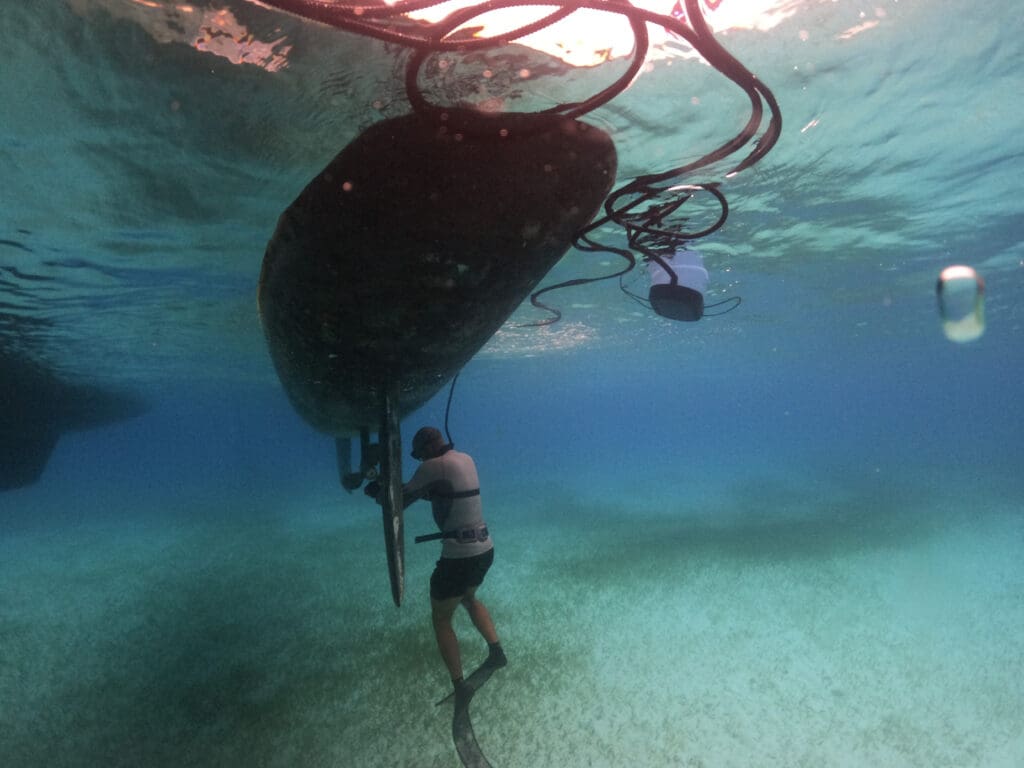
Boat owners gain a ready-to-use inspection tool that tethers directly to a floating compressor, enabling quick hull checks, propeller cleaning, and anchor recoveries without hauling tanks onboard. This on-demand access helps streamline routine maintenance, reduces reliance on professional dive services, and keeps vessels in better condition between scheduled haul-outs.
What Are Common Questions About Surface Supplied Diving vs. SCUBA Diving?
Below are concise insights into questions divers often ask when weighing these two approaches.
What Are the Key Differences Between Surface Supplied Diving and SCUBA?
Traditional surface supplied diving (SSD) delivers air from the surface through an umbilical connected to a compressor or high-pressure tanks, often with voice communication and full surface support. SCUBA, on the other hand, relies on self-contained cylinders carried by the diver, offering untethered mobility but with limited gas supply. BLU3’s portable tankless systems represent a recreational form of surface supplied diving, using lightweight floating compressors that provide air through a hose without the complexity of industrial SSD. This makes them distinct from both heavy commercial SSD setups and conventional SCUBA cylinders, with each method best suited to different diving goals.
How Does Dive Time Compare Between Surface Supplied Diving and SCUBA?
Surface supplied systems provide bottom times constrained by compressor runtime or battery capacity. SCUBA dives typically last 40–60 minutes at 60 ft depths before gas supply or decompression limits are reached.
What Are the Cost Differences Between the Two Diving Methods?
SCUBA diving involves initial certification fees, tank rental or purchase, gear maintenance, and refill charges. Tankless diving centers on a one-time purchase of a portable compressor unit and minimal ongoing maintenance, offering lower per-dive logistics costs for frequent users.
Can Portable Tankless Systems Replace Traditional SCUBA for All Diving Needs?
No, tankless systems excel in shallow-water, recreational, and maintenance scenarios but cannot match SCUBA for deep diving, complex wreck penetration, or technical diving that requires trimix, redundant cylinders, and advanced decompression capabilities.
Diving with either method broadens underwater access, but your goals—depth, duration, mobility, and convenience—will determine which approach best enhances your marine exploration and conservation efforts.
Traditional SCUBA remains essential for deep, independent dives, while surface supplied tankless gear like BLU3 Nomad opens new possibilities for simple, shallow-water adventures. As you plan your next underwater outing, consider how portability and dive depth factor into your plans.
Frequently Asked Questions
How does the cost of maintenance differ between surface supplied diving and SCUBA?
Maintenance costs for surface supplied diving systems are generally lower than those for SCUBA. Surface supplied systems require regular checks of the compressor and air hoses, but they do not involve the frequent tank refills and inspections that SCUBA gear demands. SCUBA divers must regularly maintain their tanks, regulators, and buoyancy control devices, which can add up over time. For frequent divers, the one-time investment in a portable tankless system can lead to significant savings in the long run, especially when considering the costs associated with tank rentals and refills.
What types of diving scenarios are best suited for surface supplied systems?
Surface supplied systems are ideal for scenarios that require extended dive times and shallow-water exploration, such as boat inspections, underwater maintenance, and scientific research. Recreational divers looking for spontaneous shallow dives will also find these systems advantageous, as they eliminate the need for heavy equipment and allow for quick setup and mobility.
Can surface supplied diving be used for deep dives?
While surface supplied diving is primarily designed for shallow-water applications, it can be adapted for deeper dives, especially in commercial or scientific contexts. However, the depth limits depend on the specific equipment used and the diver’s training. For recreational divers, traditional SCUBA remains the preferred method for deep dives due to its autonomy and the ability to manage decompression more effectively. Modern surface supplied systems are best utilized in shallow water environments.
How do training requirements differ between surface supplied diving and SCUBA?
Training for SCUBA diving requires full certification through agencies like PADI, SSI, or GUE, covering theory, pool skills, and open-water dives to ensure competence in buoyancy, regulator use, and air management. Commercial surface supplied diving demands specialized training for equipment and safety protocols, while recreational surface supplied diving with BLU3’s portable systems such as the Nomad includes an online course that teaches setup, operation, and emergency drills. In all methods, proper training is essential before entering the water.
Conclusion
Choosing between surface supplied diving and traditional SCUBA diving can significantly impact your underwater experience, offering unique benefits tailored to your needs. Traditional surface supplied systems, while effective, often involve more complex logistics and heavier equipment compared to modern innovations. In contrast, modern tankless surface supplied systems, like those offered by BLU3, enhance simplicity and convenience, making them ideal for spontaneous exploration and maintenance tasks, while SCUBA provides the freedom of mobility for deeper dives. Understanding these differences empowers you to make informed decisions that align with your diving goals. Explore our range of diving equipment and find the perfect solution for your next adventure today.
Important use information: Always read the Owner’s Manual and complete the BLU3 Online Dive Training before use. Never exceed the rated depth, always use a dive flag where required, and follow local laws. Participation depends on a fitness-to-dive evaluation; certain medical conditions and age limits apply.